Yo Shimada Lab, Environmental Design, KCUA
loading ...
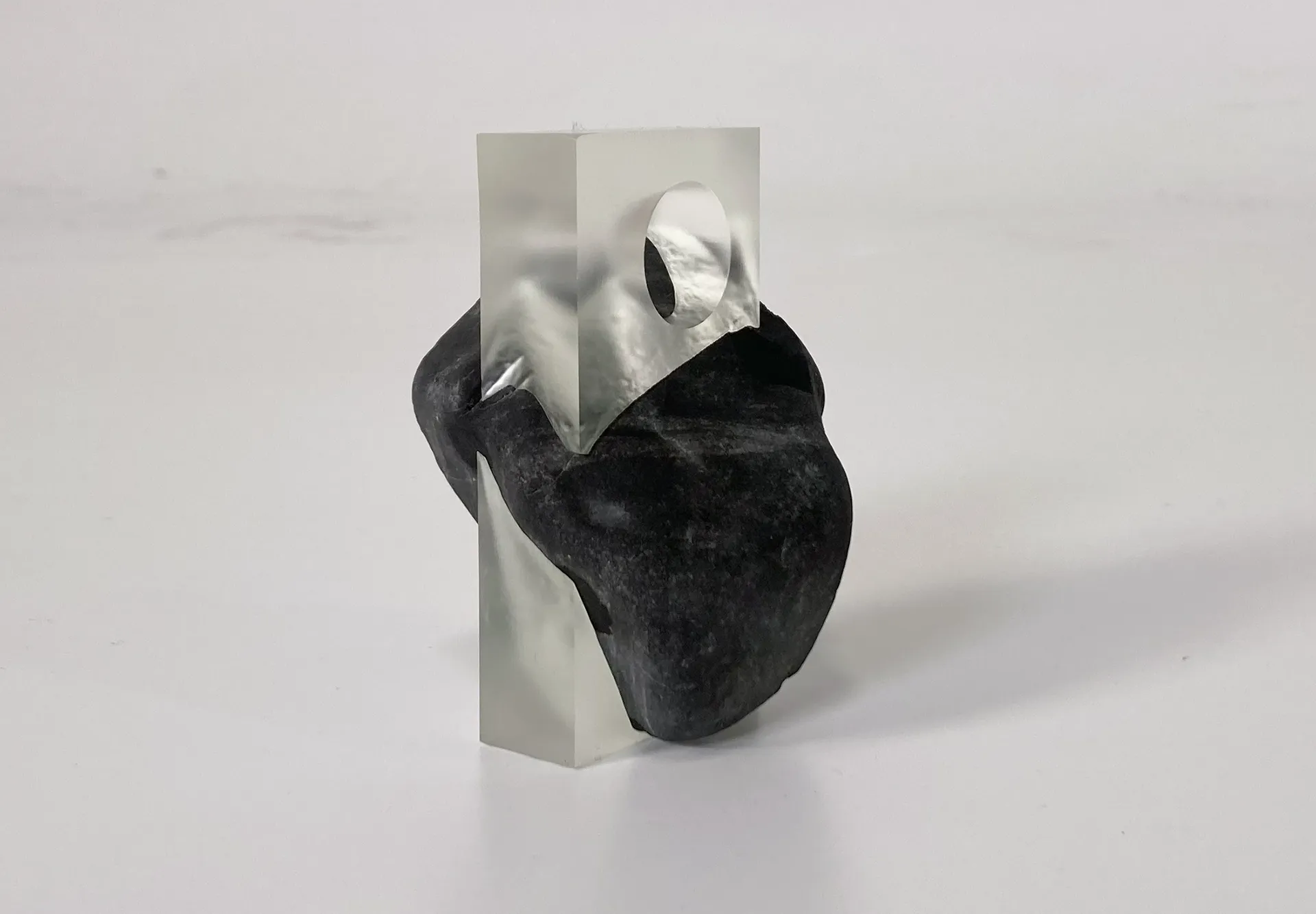
「のせもの」とは、石などの自然物を3Dスキャンし、その表面に寄生するように人工物を付加してつくられる道具のシリーズである。京都を拠点に3Dプリンターによるものづくりを展開する新工芸舎を講師に招き、このワークショップを開催した。
学生は事前に各自で石を採集して持ち寄り、当日はまずその石を3Dスキャンすることから始めた。スキャンした形状データに対して、Rhinocerosのブーリアン演算やBlenderの重力シミュレーションを用いながら、石の凹凸にぴったりと沿う部品を設計する。設計した部品を3Dプリンターで出力し、石に接着することで、拾ってきた石が道具へと姿を変える。
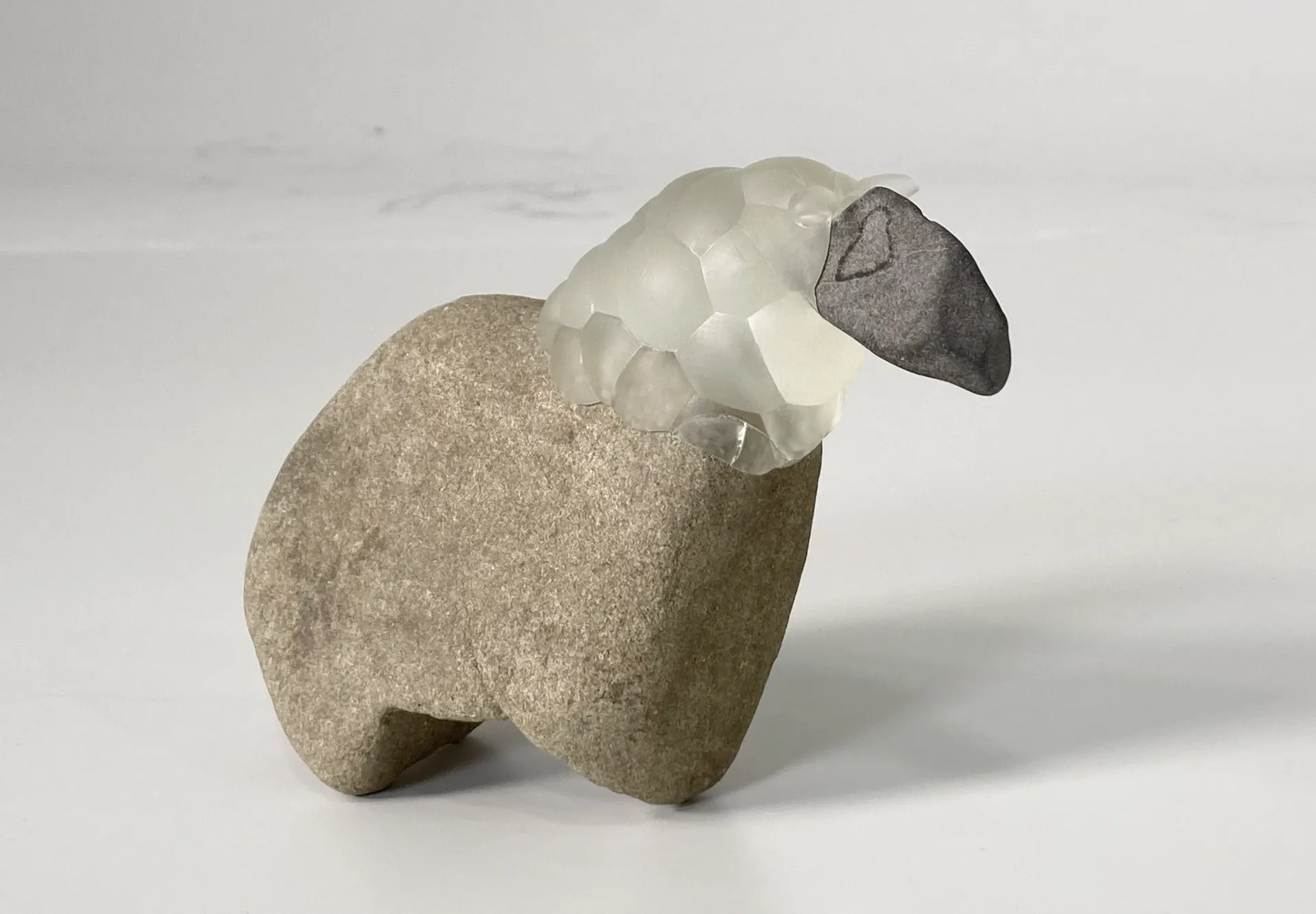
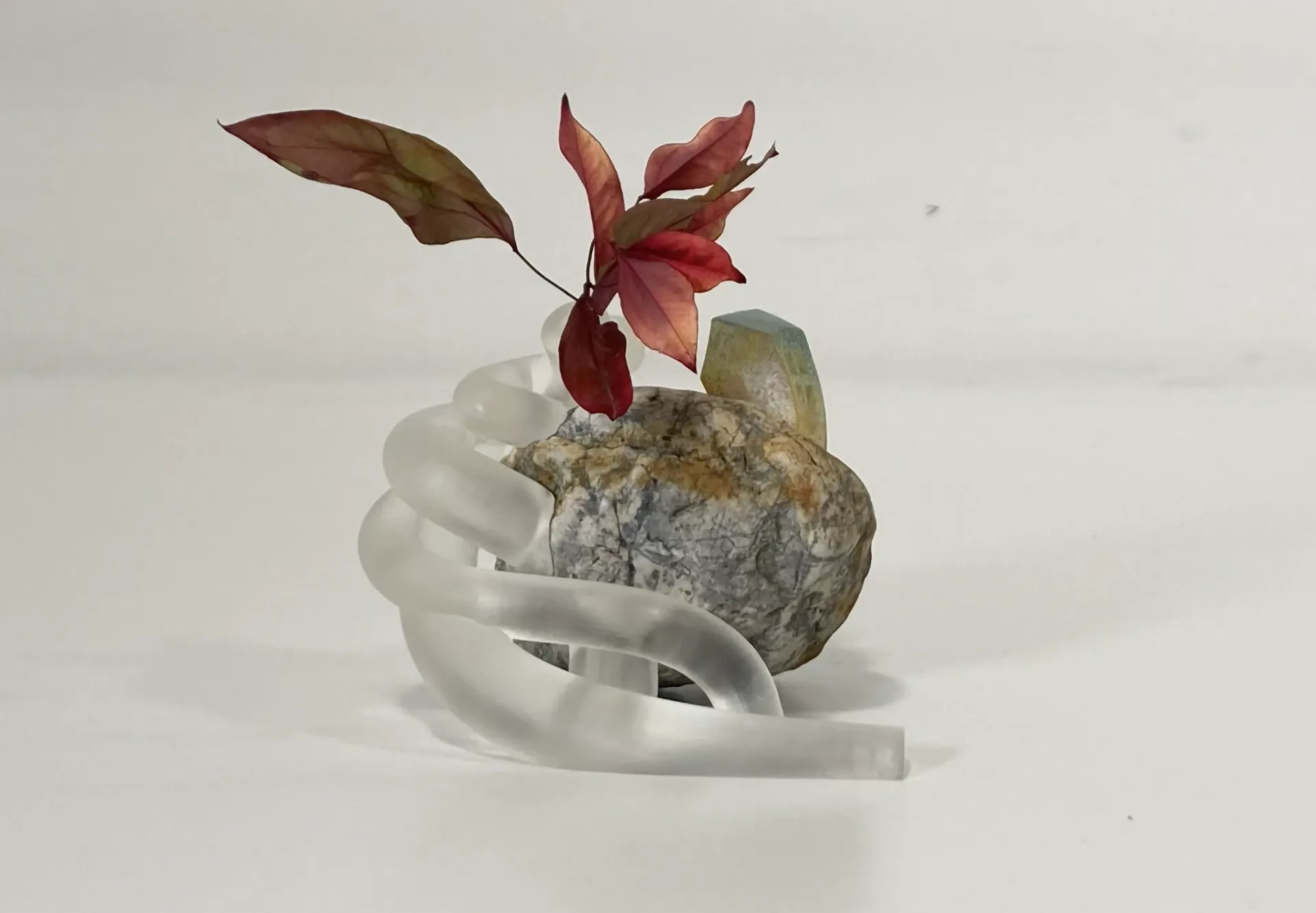
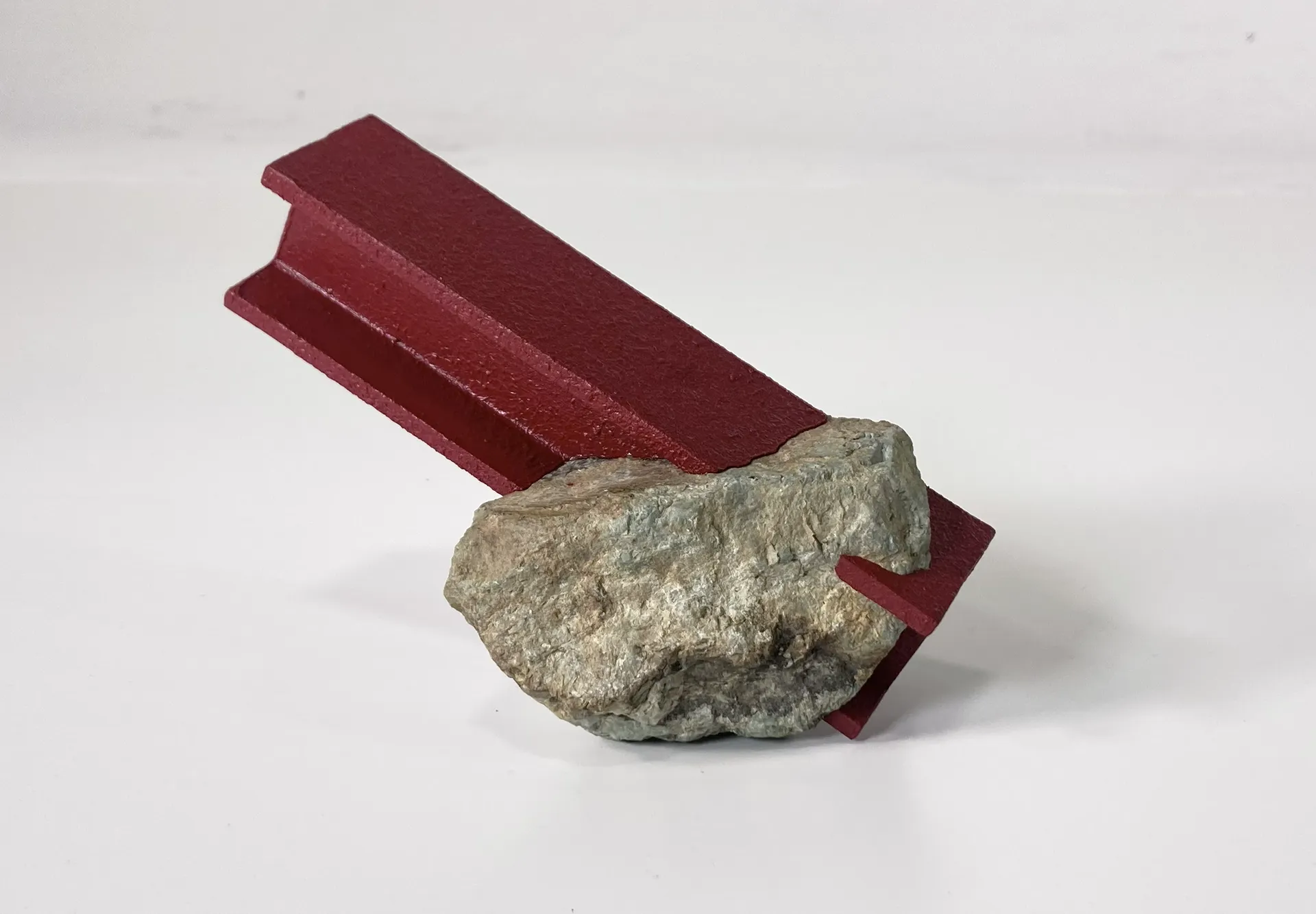
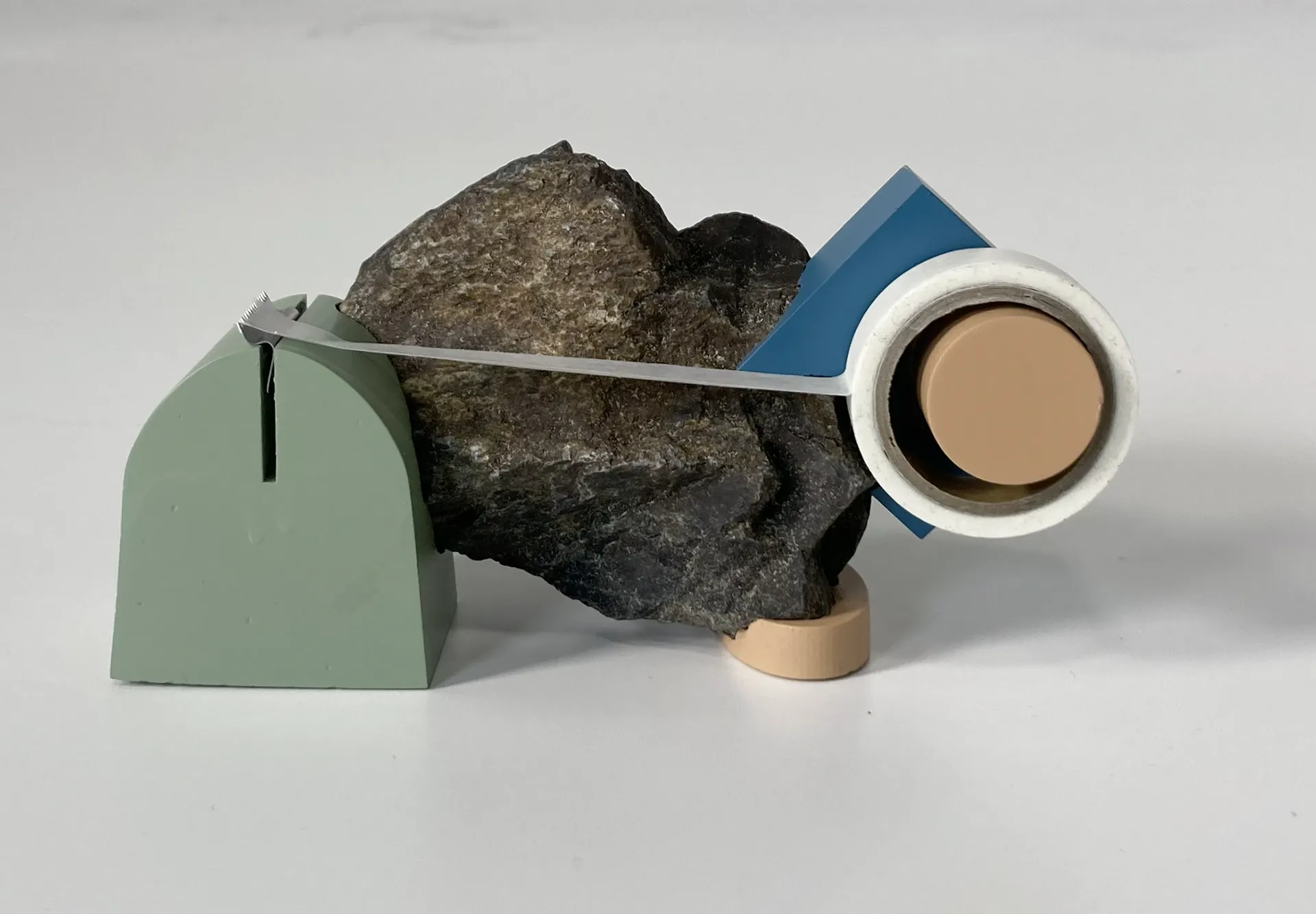
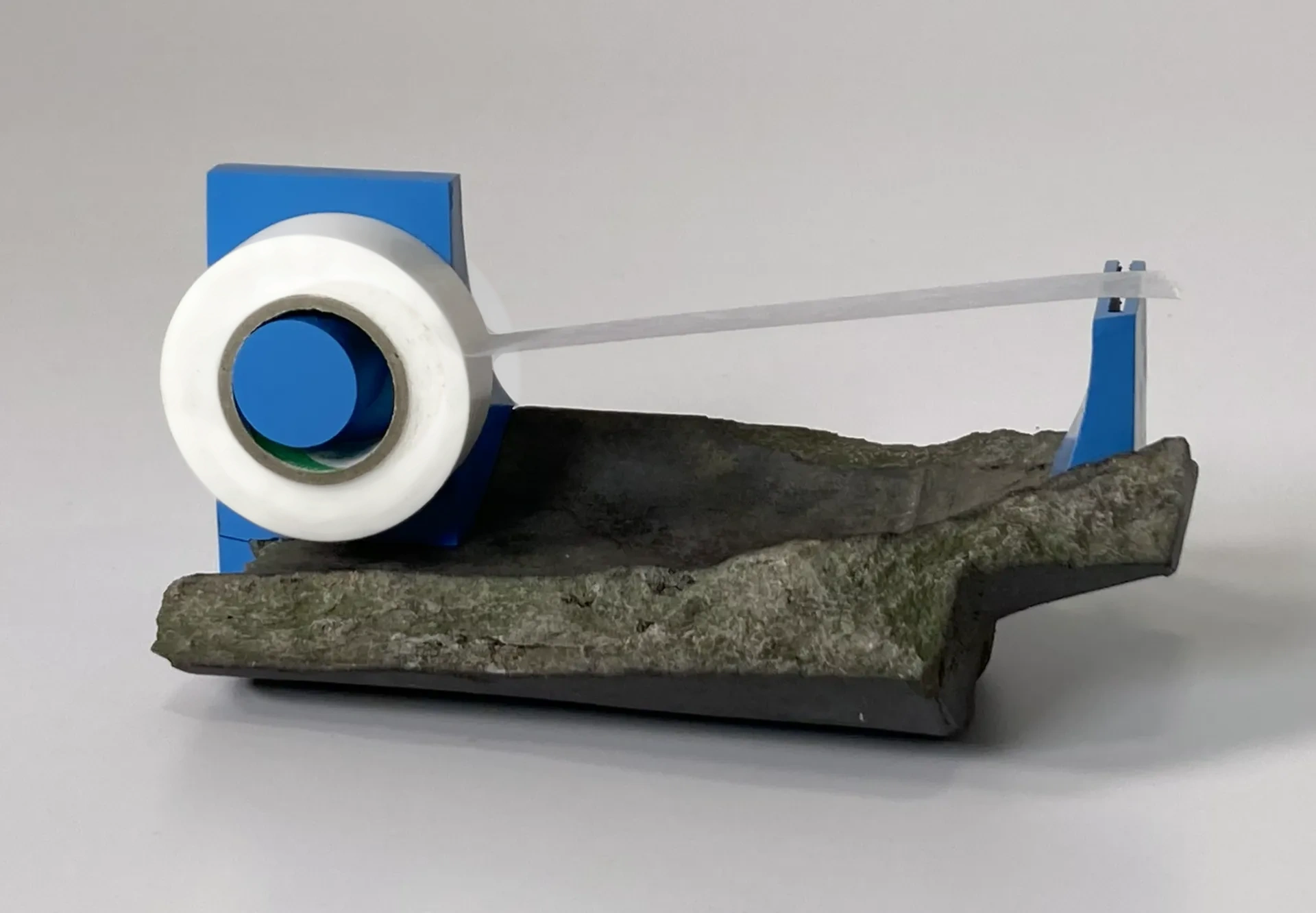
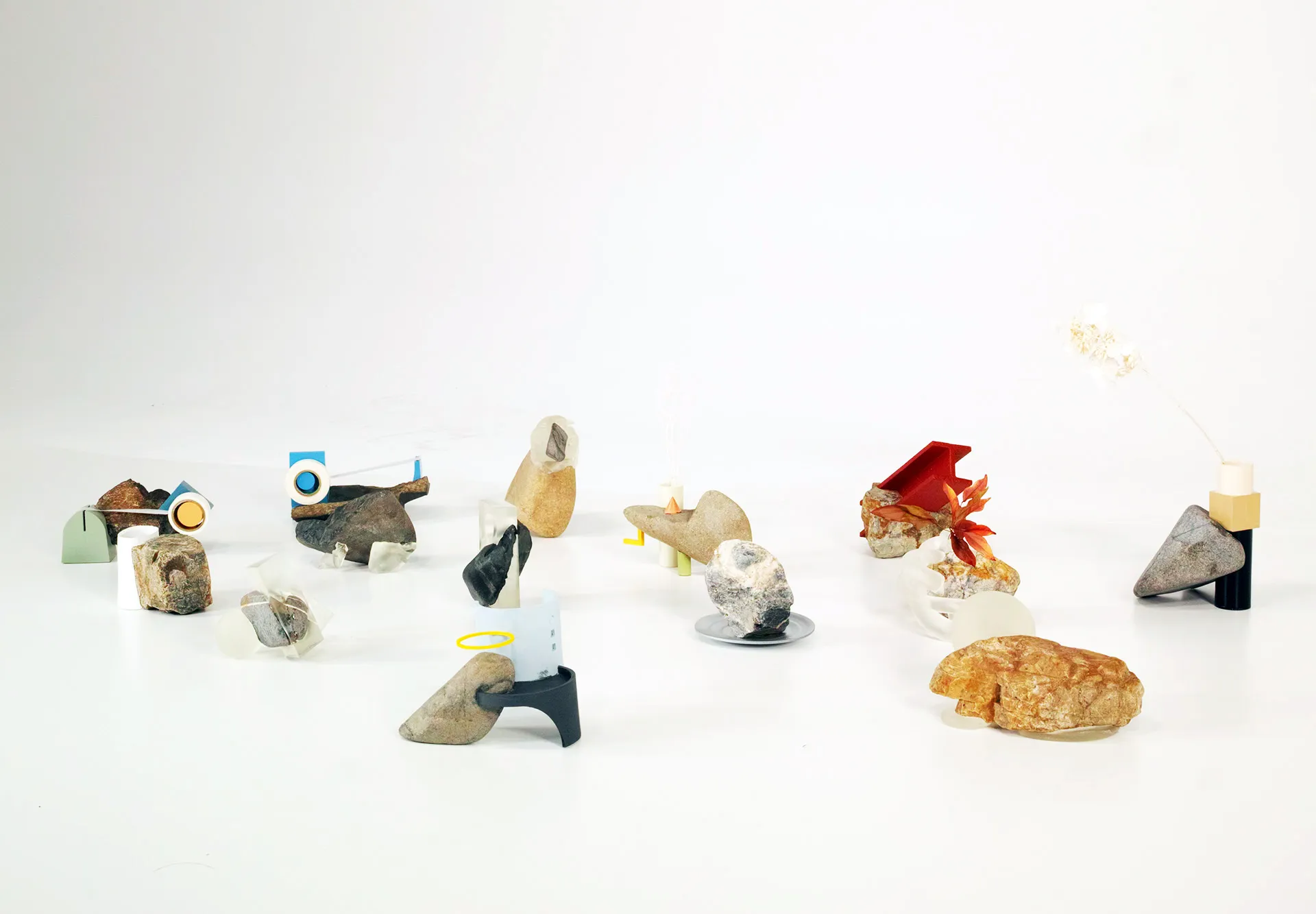
出来上がった作品には、石を抱き込むように透明なチューブが巻きつく花器、石の背に半透明の毛をまとった羊、石を車体にしたテープカッター、球体の刃を石にのせた鉛筆削りなどがある。石の重さや形、模様といった一つとして同じもののない性質が発想の源となり、機能は石を選ばせ、石は機能を引き寄せる。自然物と人工物、偶然の形と設計された形が互いに寄り添う関係を、手の中におさまるスケールで考える機会となった。
Nosemono is a series of tools created by 3D-scanning natural objects such as stones and attaching artificial parts that cling to their surfaces, almost parasitically. For this workshop, we invited Shinkogeisha, a Kyoto-based studio exploring craft through 3D printing, as lecturers.
Each student collected stones in advance and brought them to the workshop, which began with 3D-scanning the stones. Working with the scanned geometry, students designed parts that fit precisely to the contours of each stone, using Boolean operations in Rhinoceros and gravity simulation in Blender. The designed parts were then 3D-printed and glued to the stones, transforming found stones into tools.
The finished works include a vase with a translucent tube coiling around its stone, a sheep wearing a fleece of translucent facets on the back of a stone, a tape dispenser with a stone for its body, and a pencil sharpener with a spherical blade resting on a stone. The singular qualities of each stone—its weight, form, and markings—became sources of inspiration: the function chooses the stone, and the stone attracts the function. The workshop offered an opportunity to consider, at a scale that fits in the hand, a relationship in which the natural and the artificial, accidental form and designed form, lean gently on one another.
x Close